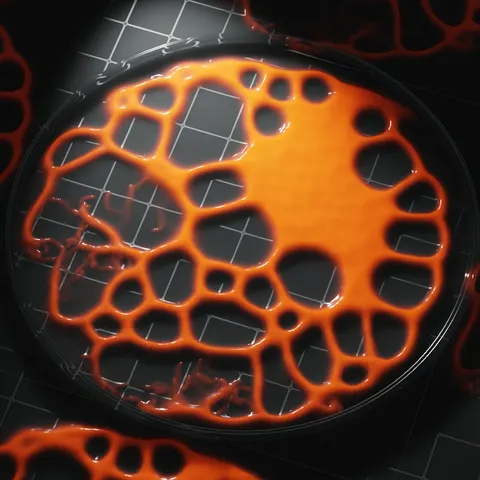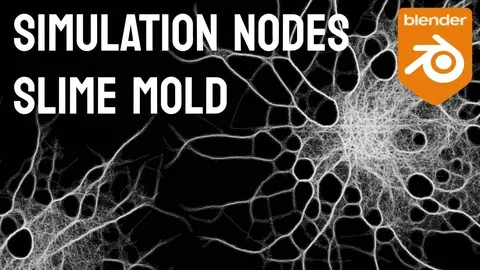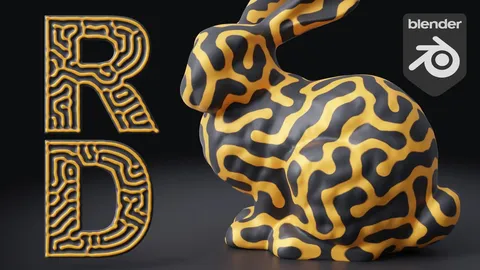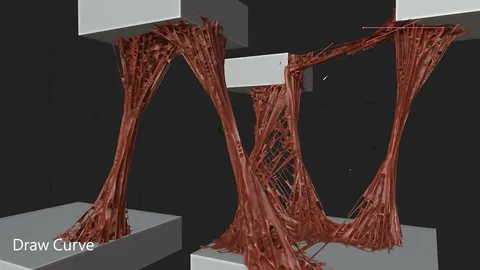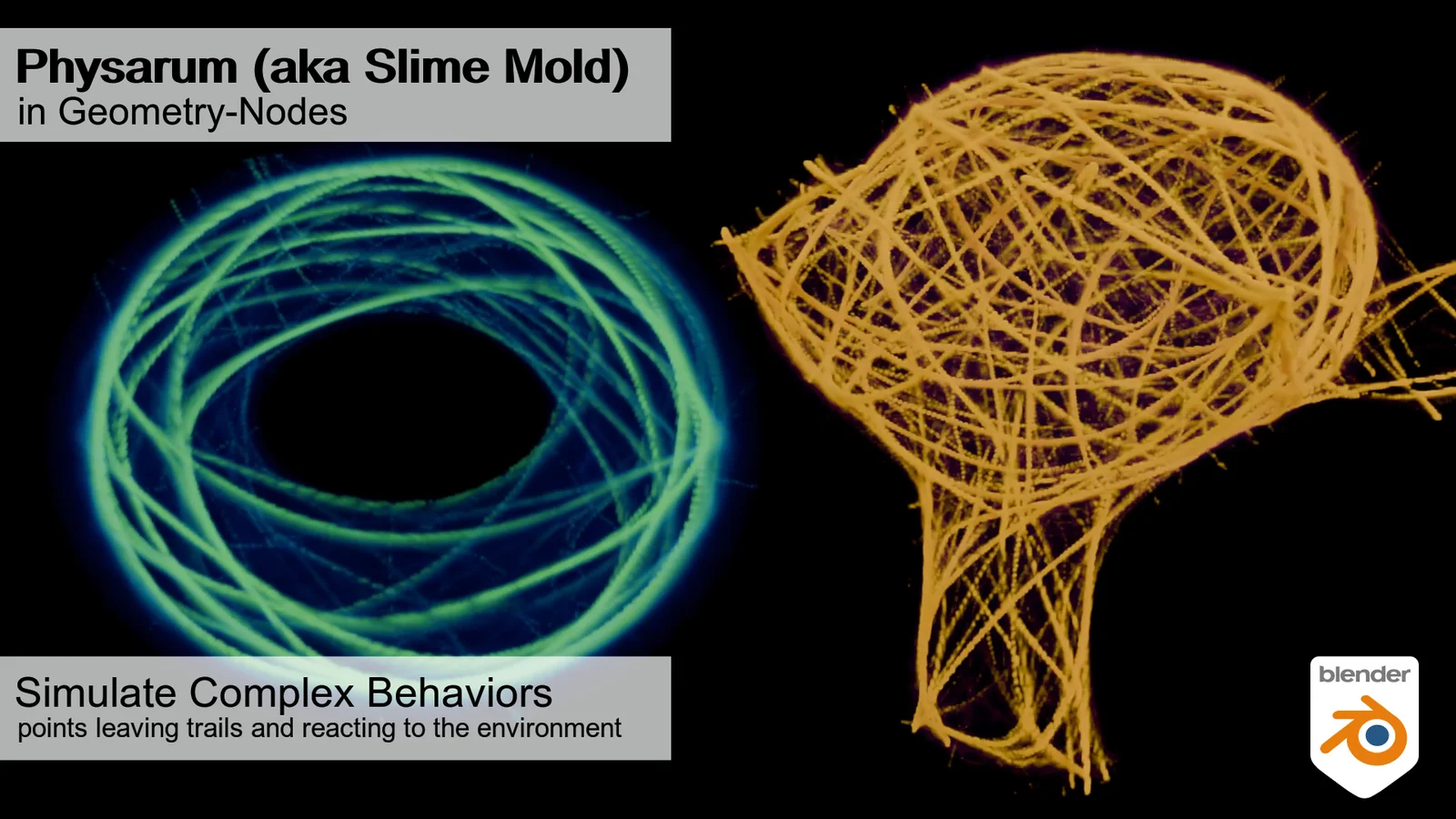
This Geometry Nodes setup generates complex emergent behaviors based on the mechanics of Physarum polycephalum, commonly known as slime mold. The system models a population of point entities that perceive environmental signals, react by changing direction, and leave continuous trails across a volume grid. These interacting rules create a continuous feedback loop that results in intricate, organic patterns.
The simulation workflow is divided into two parts: a base simulation modifier that handles the point and volume data, and a dedicated rendering modifier that controls the visualization of points, volumes, and paths. The setup is highly customizable, exposing parameters for the entity's movement distance, sensing angle, rotation speed, and the strength of the trails they deposit. Simulation resolution is bound to the target volume grid's voxel count, providing a direct balance between pattern detail and computational performance.
You might also like